Friday, October 28, 2011

Chapter 11: The Agricultural Core

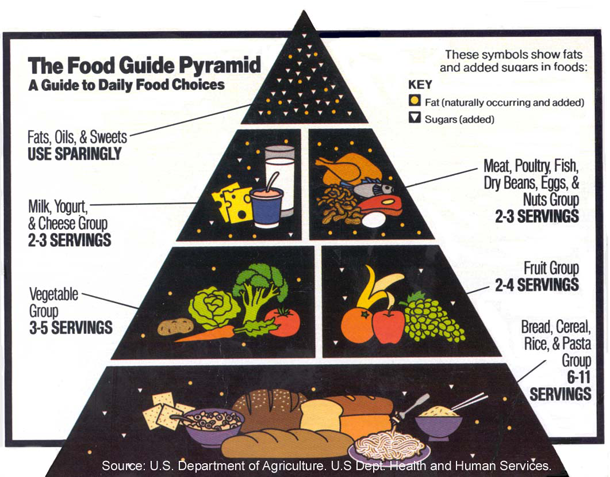
Washington D.C. is far from the heartland of America. It is not an agricultural city by any means, it is a large metropolitan city with no vast stretches of farmland. However, D.C. is very important to agriculture in that it is the headquarters for the United States Department of Agriculture.
 The USDA began as a division of the US Patent Office. It's main duties were to collect statistics on agriculture and to serve "other agricultural purposes."It was not until 1862, that President Lincoln established the USDA as its own autonomous agency. The USDA has served many purposes over the years. It has helped teach agriculture and home economics to the public, helped to ensure that food was being produced and distributed during the Great Depression, assisted with loans for landowners, and has helped to provide education on proper nutrition.
Source:http://thesocietypages.org/graphicsociology/files/2009/06/food_pyramid_usda_old.png


Chapter 10: The Southern Coastlands: On the Subtropical Margin

Washington D.C. shares two major characteristics with the Southern Coastlands.

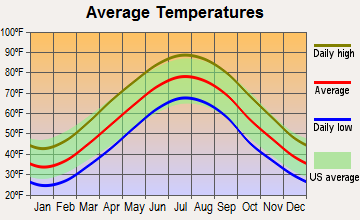
First, it also has a subtropical climate. Subtropical climates are generally characterized by long, hot, humid summers. In Washington D.C., summer temperatures range from the uppers 70s in late May, to the upper 80s in August. It is not uncommon for there to be heat waves, where the temperature can easily climb into the 90s and 100s. Humidity adds to the discomfort of the heat. Average July humidity is around 66%. (Source: http://en.wikipedia.org/wiki/Washington,_D.C.#Climate)
Source: http://pics2.city-data.com/w1q/lhaq3714.png
Second, Washington D.C. is also prone to hurricanes. Although usually not nearly as strong as those that hit the Southern Coastlands, hurricanes have been known to hit D.C. These hurricanes are generally the weak fallout of larger storms and hit anywhere from late summer to early fall. They have, on occasion, been fairly strong.
Source: http://media.nationaljournal.com/?controllerName=image&action=get&id=10927

Sunday, October 16, 2011

Chapter 9: The Changing South

Washington D.C. is located outside of the Southern region of the United States, however it does have one of the largest populations of African Americans in the country. Of the approximately 600,000 people living within the city limits, more than half (52.7% or 315,968) were African American.
Source: http://pics.city-data.com/craces2/3714.jpg


Again, although not in the South, Washington D.C. does have a history of slavery. 10 of the first 15 presidents were slaveholders, including George Washington, James Madison and Andrew Jackson. Slaves were used in such positions as cab drivers, barbers and hotel staff. In fact, on the day Abraham Lincoln was inaugurated in 1861, there was a slave auction less than 5 miles away from the capitol. (Source: http://opinionator.blogs.nytimes.com/2011/02/24/a-capital-under-slaverys-shadow/?partner=rss&emc=rss)
Source:http://graphics8.nytimes.com/images/2011/02/24/opinion/disunion_goodheart_25capitol/disunion_goodheart_25capitol-popup-v2.jpg


Saturday, October 15, 2011

Chapter 8: Appalachia and The Ozarks

Washington D.C. is located outside of the Applachia and Ozarks regions, however some of the Appalachia region does spread into the surrounding states of Maryland, Virginia and West Virginia.

As for the city itself, Washington D.C. is rather flat. The highest point in the city is only 420 ft. above sea level. Within the city there are a few natural areas which have remained undeveloped, the largest of which is Rock Creek Park.
Source: http://www.nationalparks.org/images/PlanYourParkTripimgs/parkgraphics/ROCR.jpg
Rock Creek Park is a 1,754 acre natural area which is located within the D.C. city limits. The park was established in 1890 and is under the care of the National Parks Service. It is used by city dwellers for various recreational activities including jogging and cycling.

Source: http://www.cityprofile.com/forum/attachments/district-columbia/8042-washington-anacostia_park2.jpg
Anacostia park is another large natural area located in the D.C. area. The park covers approximately 1,200 acres and is also under the care of the National Parks Service. Some of the activities the park is used for include boating, baseball, jogging and picnicking.

Unlike the Appalachia region, Washington D.C. does not suffer from the extreme levels of poverty found in some Appalachian areas. The median household income in 2009 was $58,906, which is about $8,000 above the national average. Source: http://quickfacts.census.gov/qfd/states/11000.html

Chapter 7: The Bypassed East

Washington D.C. is not located in the area known as the Bypassed East, which is the Atlantic Provinces of Canada, Northern New England and the Adirondack region of New York. In addition, it does not share many similarities with the region.

Source: http://www.majorleaguesoccertalk.com/media/2009/05/dc-metro-area.jpg
In contrast to the sparse population centers of the Bypassed East, Washington D.C. is considered to be one of the major metropolitan areas of the United States. There are over 600,000 people within the city limits, and over 5 million in the metropolitan area. The D.C. metropolitan area is made up of two divisions, Washington and Bethesda (Md). The makeup is as follows:

Washington: D.C., Arlington and Alexandria-this includes the DC, Va, MD and WV metro division.
Bethesda: Bethesda, Frederick and Gaithersburg-this includes both Frederick and Montgomery counties.

Also unlike the Bypassed East, Washington D.C. is relatively flat. The highest point in the city is 420 ft. above sea level. To find mountainous terrain, one must travel outside of the city limits to areas in surrounding Maryland, Virginia or West Virginia.

Friday, September 30, 2011

Chapter 5: The North American Manufacturing Core

Washington D.C. is located in the North American Manufacturing Core. This area is located in the Northwest of the United States and is concentrated in the Ohio River Valley, Megalopolis and Great Lakes areas.

Source: http://aboutusa.japan.usembassy.gov/gifs/wwwg-jusa-geo-map04.gif
The district is actually located in the outskirts of the manufacturing core and little manufacturing is actually done within the city limits. In 2004 only 3.9% of all jobs in the city were in the manufacturing field. That number is expected to drop to 2.8% by 2015. (source: http://www.city-data.com/us-cities/The-South/Washington-D-C-Economy.html). 


Source: http://www.copycatprintshop.com/Graphics/bind.jpg
The industries that dominate the D.C. area are paper (there are over 500 publishing/printing companies in the district), telecommunications, information technology, computer, tourism and hospitality firms. In addition, with over 100 million square feet of office space and the fact that D.C. is the capitol of the United States, the concentration of government and government related operations is unmatched in the country.

Chapter 4: Megalopolis

Washington D.C. sits in the original Megalopolis, as described by geographer Jean Gottman in 1961.

The Megalopolis is an the area of the East Coast of the United States (from Washington D.C. to Boston) noted for its large population agglomeration (Approx. 50 million people).

Megalopolis.
Source: http://usa.usembassy.de/etexts/outgeogr/map3.gif
The region accounts for 20% of the U.S. Gross Domestic Product. The region is home to the New York Stock Exchange and NASDAQ, the White House and United States Capitol, the headquarters of the United Nations, and the headquarters of ABC, NBC, CBS, Fox, the New York Times Company, USA Today, and The Washington Post. The headquarters of many major financial companies—such as State Street, Citigroup, and Fidelity—are located within the region, which is also home to 54 of the Fortune Global 500 companies. The headquarters of 162 of the Fortune 500 are in the region. The region is also the center of the global hedge fund industry, with 47.9% of $2.48 trillion of hedge fund assets being managed in its cities and suburbs. Similarly, the majority of the global private equity, venture capital, investment banking, and management consulting industries are centered and/or headquartered in this region.
Source: http://en.wikipedia.org/wiki/Northeast_Megalopolis


One reason Washington D.C. is part of this Megalopolis is the fact that it is easily accesible by navigable waters. It's proximity to the Potomac river, and in turn Chesapeake Bay and the Atlantic Ocean. This opens up major options for trade and commerce, with the international community as well as the other Megalopolis cities, which are all linked by  Interstate 95 and US Route 1.


Another important reason is due to the fact that Washington D.C. is home to all major government operations. This includes the White House, Capitol, Supreme Court, Pentagon and FBI.